
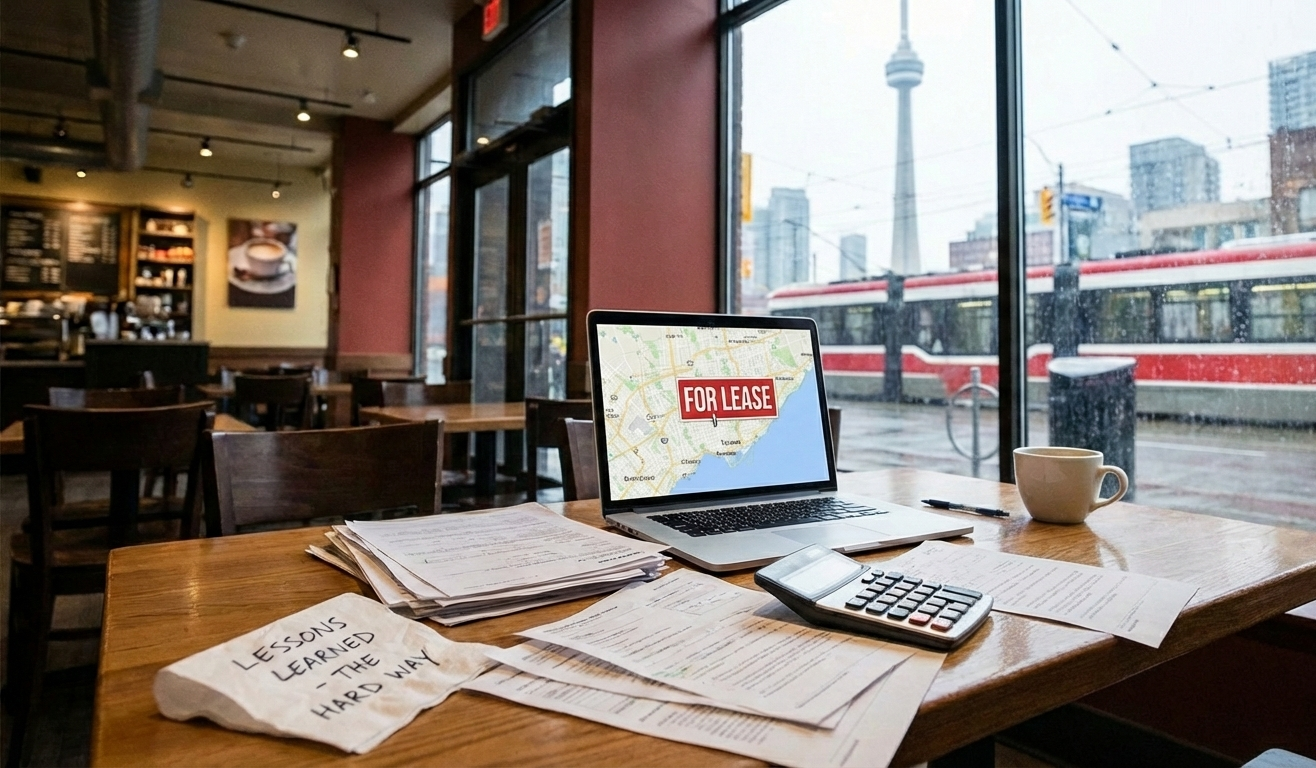
If you only look at headlines, restaurant leasing in the GTA looks confusing.
Retail vacancy is tight. Rents are still high. Yet restaurants are closing everywhere—and more will close in the next couple of years. So how do those two realities live side by side?
The honest answer: the market isn’t broken, it’s being reset.
And as an operator who’s signed leases, reopened spaces, and taken over failed restaurants, I can tell you—this is one of the most misunderstood moments in our industry.
Yes, spaces are tight—but not all spaces are usable
On paper, GTA retail vacancy is still hovering around historic lows. Good streets, good corners, strong neighbourhood nodes—those spaces don’t sit empty long.
But here’s what that data doesn’t show:
a restaurant closing does not automatically create a “restaurant-ready” opportunity.
Many of the closures we’re seeing leave behind:
- exhausted hoods and venting
- grease systems that don’t meet today’s standards
- electrical panels that can’t support modern kitchens
- layouts designed for concepts that no longer work
So while landlords technically have space, operators still struggle to find the right space—and that’s why competition hasn’t disappeared.
Closures are real—and landlords are paying attention
There’s no denying it: Canada is going through a restaurant correction. Thousands of operators are exiting, and more will follow. Rising labour costs, food inflation, insurance, debt from COVID years—it’s all catching up.
Landlords know this.
But instead of panicking, most have become more selective, not more flexible.
What I see now is a landlord mindset that says:
“If I’m taking restaurant risk, I want an operator who understands the business—not just someone with a nice concept deck.”
They’re not looking for hype. They’re looking for:
- durability
- operational discipline
- realistic sales expectations
- and someone who won’t disappear after the first winter
Reusing restaurant spaces can work—if you’re honest about why the last one failed
Two of my own projects are perfect examples of this.
The Berczy Tavern
The Berczy wasn’t a ground-up fantasy. It was a reconversion of an existing restaurant space—one that had already seen a concept fail.
The failure wasn’t the location.
It wasn’t the neighbourhood.
It was positioning, execution, and structure.
By respecting what the space could realistically do—and designing a concept that matched both the infrastructure and the local demand—we were able to bring it back to life.
Restaurant Lucie
Lucie is another reconversion—again, not a blank canvas.
What mattered wasn’t forcing the space to become something it wasn’t, but:
- understanding the bones of the building
- designing the menu around what the kitchen could do efficiently
- and aligning the lease structure with the realities of fine dining margins today
Both projects worked not because the spaces were perfect—but because the strategy matched the reality.
That’s the lesson many new operators miss.
The lease is now one of the most dangerous parts of your business
Today, a bad lease will sink you faster than bad food.
The biggest risks I see:
- underestimating build costs and timelines
- accepting “as-is” conditions without fully understanding mechanical limitations
- carrying rent that only works in a perfect sales scenario
- locking into terms that leave no room for seasonality or evolution
This is why I believe leasing now has to be treated like finance, not real estate.
If your rent only works when everything goes right, it doesn’t work.
What is opening right now—and why it matters
Even with closures, restaurants are still opening—but they look different:
- smaller footprints
- tighter menus
- fewer staff per service
- more intentional daypart use
- concepts that can flex between dine-in and off-premise
What I don’t see succeeding anymore are overbuilt, overstaffed, over-romanticized projects that rely on volume the market simply doesn’t guarantee.
Landlords see this shift too—which is why they’re often more open to:
- strong second-generation tenants
- operators with multiple use cases
- and concepts that drive consistent traffic rather than weekend spikes only
The opportunity: good operators finally stand out again
Here’s the upside no one talks about enough:
Because so many restaurants have failed, credible operators now have leverage they didn’t have five years ago.
Not always on headline rent—but on:
- structure
- fixturing timelines
- improvement allowances
- flexibility
- and long-term partnership conversations
Landlords still need restaurants. They just don’t need every restaurant.
If you come in prepared—if you understand your numbers, your space, and your risk—you immediately separate yourself from the noise.
My honest take
The GTA restaurant market isn’t dying.
It’s shedding what no longer works.
Spaces will continue to trade hands.
Concepts will continue to evolve.
And the operators who survive will be the ones who respect reality—not fight it.
If there’s one thing I’ve learned reopening and reconverting spaces like The Berczy Tavern and Lucie, it’s this:
The right space, with the right lease, for the right concept—will always win.
Everything else is just hope dressed up as confidence.